I was wondering how others combined their daily lives with Kadampa Buddhism.
If you want to reply to me, I could post the compilation here.
It also seems like a good subject for Sangha conversations.
OK, I'll start.
* Washing dishes, mentally reciting Vajrasattva's mantra and thinking that I am also purifying my mind. It's a form of cherishing others too, because R appreciates it when I take care of them.
* Weeding the yard, imagining I'm pulling up my delusions, and I try to get at the root of both; pruning, I try to think about cutting back the thorn bush of my delusions so that I can get at the root.
Occasionally when doing yardwork, listening to teachings on my iPod, and I plan to do that more often.
Also listening teachings when walking around the neighborhood.
* Driving I recite Dorje Shugden mantras to protect especially pedestrians and bicyclists as well as motor vehicles.
Also giving food bars to those asking for help at a highway on- or off-ramp). If I'm out of those bars, I dig for change or at least smile and wave, trying to remember to wish them real freedom and happiness. I like to combine those actions with something I heard that James G did when making a small donation or such: "Just as I am giving this [item] to you now, to create a connection, in the future may I can give you Dharma teachings."
* Resting on the couch practicing either taking (such as the sufferings of a particular homeless person or family I've seen recently, often one of the Real Change vendors I know) or, when I'm even more tired, rejoicing (which I like to spell reJOYcing) in things like a kindness I've read about in the news that day.
* At the chemo center or hospital, feeling compassion for all the suffering there, especially for those without a spiritual practice, and strengthening my resolve to release them. Then I try to expand the scope of beings, not forgetting the hungry ghosts or the gods. It's stronger when I can think of specific types, such as famous but envious movie stars.
I really like the idea of finding more and more ways to practice Dharma in all parts of my life, with the aim of making every moment meaningful.
One of the many features of our tradition I love is how practical it is, in so many ways. (If I had more time and energy, I'd list some, but you'll need to do that for yourself until I get around to it.) That practicality is the main thing I emphasize when someone asks me how Kadampa Buddhism is different from other schools. Gen-la Dekyong wisely advised the Seattle Sangha not to compare ours to other versions, but simply to talk about its distinctive good qualities.
Showing posts with label Spiritutal Practice. Show all posts
Showing posts with label Spiritutal Practice. Show all posts
Friday, November 6, 2015
Thursday, January 2, 2014
Making Dharma Fun
One of the ways to stay with it long-term is the switch up your practice, by adding new things or doing Dharma in a way so that you continue to enjoy it. There are also some practices here that are small and easy enough that you can do them when you're tired or sick.
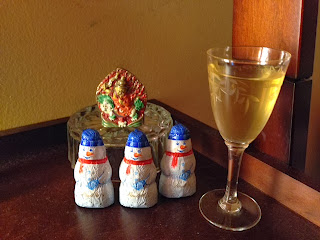
* Gamo said "I find it fun to be creative with offerings on my shrine" and sent me this photo:
Other possibilities:
* Learning a new Dharma skill, such as torma making, mantra rolling, statue filling, or mala making.
* Creating some other kind of Dharma craft. My mother-in-law, Dachog, is wonderful about using her many artistic skills in creative ways for Dharma, such making as felted birds for the bookshop, which remind me that their 2 wings represent compassion and wisdom.
* Making long mandala offerings in place of short ones.
* Rejoicing, such as in your Center's managers and volunteers, in friends' or other people's virtue,
such as this man:
"He clipped coupons, wore sweaters with holes in them to make people think he was poor and took a bus ... .Only a tight circle of family and friends knew that MacDonald was nurturing a secret fortune. When he died in September at the age of 98, he left in his will a $187.6 million charitable trust to Seattle Children’s Research Institute, the University of Washington School of Law and the Salvation Army. ..." as described in "Seattle man’sfrugal life leaves rich legacy for 3 institutions" in the Seattle Times.
* Volunteering at the Dharma Center, such as cooking for a class, distributing publicity, or buying tsog offerings for a puja. Such a wide variety of enjoyable activities - you can usually find one that works for you.
* Playing around with emptiness in meditation break, such as imagining that you're an actor and your world is simply a set. Or remembering it's all an illusion. Or imagining that you're walking around within your mind. Or ...
* Studying in a different way, such as by reading the book out loud or organizing your notes.
* Working on and tracking the Four Great Preliminary Guides. I'm inspired by Sangha who've told me they've completed them, and appreciate hearing tips from them about how to proceed!
* Offering attractive or delicious things to the Buddhas, especially to your Guru at your heart, while walking around or sitting down, such as the moon, or the mountains covered with fog or homemade Christmas cookies.
* Saying mantras, including to animals or blowing out their blessing to the whole world.
* Imagining you're the last ordinary being and that everyone around you is a Buddha; sometimes I like to think that they're wondering what's taking me so long, appreciating their patience with me, and trying to get a move on.
* As Gen-la Dekyong has demonstrated, when you overcome a delusion, even a small one, you can declare "Victory!" I think she even pantomimed thrusting her fist in the air. Sometimes when I'm struggling to get out of my warm, cozy bed, I ask Vajrapani for help, and then celebrate overcoming gravity and my aversion to the cold.
* It's also fun to follow Geshe Ben Gungyal's example of shaking his own hand when he did something good but upbraiding himself by saying "You rogue, you scoundrel" when he did something bad. Using those old-fashioned words makes it lighter and brings a small smile, so you're not being too hard on yourself. He's also the Geshe famous for tallying up his activities at the end of each day by counting up the white stones he's given for each positive mind and the black stones for each negative one. It's notable that Geshe Kelsang Gyatso mentions Ben Gungyal in almost every book, including Meaningful to Behold, on page 238 of the latest edition.
* Doing a sadhana you don’t usually do, such as Quick Path instead of Dakini Yoga, or treating yourself to the short but melodious Avalokiteshvara practice, with audio.
* Performing extra physical prostrations. I heard a story from International Teacher Training Program, where a Teacher related that the group had asked Geshe-la what was the most beneficial exercise, as though the debate was between swimming and bicycling. He replied that after 100 prostrations, you could do whatever activity you enjoyed most! It's also fun to mentally prostrate to people walking by or drivers in other cars, regarding them with respect.
* Attending a GP class you don’t usually go to. It also feels good to introduce yourself and have a conversation with someone you don’t know, even if it initially means getting out of your comfort zone and overcoming your attachment for your friends.
* Reading Geshe-la’s kids’ books, which I was told aren’t just for kids.
* Just staring at an image of a Buddha, whether it's a statue or a full-color illustration or even a line drawing. In fact, there's a long-term practitioner in Seattle who photocopied each line drawing in the books and collected them in a hand-made book.
* Reading a book on the side (other than the book you’re studying). Even just a paragraph, taking time to really think about it. I used to do this with Guide to the Bodhisattva's Way of Life. Because it's a poem, it's such a treat - very different from the books we formally study - with so many beautiful lines to memorize.
* Looking backward and forward at your life. If you're feeling discouraged, it can be so helpful to see how far you've come. Or looking forward, identifying with your potential, knowing that your compassion is the seed that will inevitably ripen into enlightenment. Gen Choma was very encouraging when she talked at the Post Fall Festival Retreat about realizing emptiness, saying "it was just a matter of time."
* Dreaming about a Celebration or Festival you'd like to attend this year, and then taking steps to make it happen. If you think you won't be able to go because of your job or your resources, I highly recommend talking regularly to our Dharma Protector, who I like to call "the best travel agent": he has made arrangements for me when it seemed it wouldn't be possible to go, notably to Summer Festival 2009, Brazil in 2010, and to a Celebration in Canada last year.
You can go to your regional celebration, your country's Festival, or the international Festivals, especially Summer Festival at our Mother Center in England. I get a boost every time - no space here to list all the benefits.
Also note that Fall Festival this year will be in NY, which will be easier for Americans than traveling abroad. You may not be aware that the Highest Yoga Tantra (HYT) empowerments are being offered this year in Hong Kong in December at the Asian Festival! I have been to Hong Kong a few times, and there are a lot of English speakers and excellent cheap food of all kinds - one of the easiest places to visit in Asia.
* Imagining what it will be like when you’re a Buddha, being able to really help everyone. I had a friend who asked me what my specialty was going to be, because as a vet, she wanted to be the Buddha of animals. Of course, it’s not as though Buddhas have their exclusive territories, but it’s fun to think about. We also used to joke about what color we’d be, what our hand gesture we'd have and what we’d be holding. I thought maybe I could be the Buddha of lost causes, while recognizing there really aren’t any. By the way, I'm not saying that's a qualified practice, because I've never heard it from a Teacher or read it in a book.
* Watching Kadampa videos or visiting the NKT's Facebook page or Kadampa website, because there’s always something new. For example, you can see videos, photos, and updates on the NKT International Festivals FB page.
* Listening to Kadampa recordings when you're doing mundane tasks, such as walking the dog.
* Trying a new way of dealing with difficulty, such as a different way to combat impatience from what you usually do.
* Seeing Dharma lessons in everything. I remember Gen-la Dekyong at a Festival in NY saying that we could learn even from the ducks in the lake. I like to hear Dharma in pop music, as if it's coming from Buddha. I'm thinking of lines like "I'll take you there [the Pure Land]"or "Don't you worry 'bout a thing."
Sometimes it helps, when I've gotten myself into a heavier place, to remind myself I am on - as the book title says - the "Joyful Path."
P.S. I thought I'd posted this a couple of weeks ago, which was when I typed it all up.
* Gamo said "I find it fun to be creative with offerings on my shrine" and sent me this photo:

Other possibilities:
* Learning a new Dharma skill, such as torma making, mantra rolling, statue filling, or mala making.
* Creating some other kind of Dharma craft. My mother-in-law, Dachog, is wonderful about using her many artistic skills in creative ways for Dharma, such making as felted birds for the bookshop, which remind me that their 2 wings represent compassion and wisdom.
* Making long mandala offerings in place of short ones.
* Rejoicing, such as in your Center's managers and volunteers, in friends' or other people's virtue,
such as this man:
"He clipped coupons, wore sweaters with holes in them to make people think he was poor and took a bus ... .Only a tight circle of family and friends knew that MacDonald was nurturing a secret fortune. When he died in September at the age of 98, he left in his will a $187.6 million charitable trust to Seattle Children’s Research Institute, the University of Washington School of Law and the Salvation Army. ..." as described in "Seattle man’sfrugal life leaves rich legacy for 3 institutions" in the Seattle Times.
* Volunteering at the Dharma Center, such as cooking for a class, distributing publicity, or buying tsog offerings for a puja. Such a wide variety of enjoyable activities - you can usually find one that works for you.
* Playing around with emptiness in meditation break, such as imagining that you're an actor and your world is simply a set. Or remembering it's all an illusion. Or imagining that you're walking around within your mind. Or ...
* Studying in a different way, such as by reading the book out loud or organizing your notes.
* Working on and tracking the Four Great Preliminary Guides. I'm inspired by Sangha who've told me they've completed them, and appreciate hearing tips from them about how to proceed!
* Offering attractive or delicious things to the Buddhas, especially to your Guru at your heart, while walking around or sitting down, such as the moon, or the mountains covered with fog or homemade Christmas cookies.
* Saying mantras, including to animals or blowing out their blessing to the whole world.
* Imagining you're the last ordinary being and that everyone around you is a Buddha; sometimes I like to think that they're wondering what's taking me so long, appreciating their patience with me, and trying to get a move on.
* As Gen-la Dekyong has demonstrated, when you overcome a delusion, even a small one, you can declare "Victory!" I think she even pantomimed thrusting her fist in the air. Sometimes when I'm struggling to get out of my warm, cozy bed, I ask Vajrapani for help, and then celebrate overcoming gravity and my aversion to the cold.
* It's also fun to follow Geshe Ben Gungyal's example of shaking his own hand when he did something good but upbraiding himself by saying "You rogue, you scoundrel" when he did something bad. Using those old-fashioned words makes it lighter and brings a small smile, so you're not being too hard on yourself. He's also the Geshe famous for tallying up his activities at the end of each day by counting up the white stones he's given for each positive mind and the black stones for each negative one. It's notable that Geshe Kelsang Gyatso mentions Ben Gungyal in almost every book, including Meaningful to Behold, on page 238 of the latest edition.
* Doing a sadhana you don’t usually do, such as Quick Path instead of Dakini Yoga, or treating yourself to the short but melodious Avalokiteshvara practice, with audio.
* Performing extra physical prostrations. I heard a story from International Teacher Training Program, where a Teacher related that the group had asked Geshe-la what was the most beneficial exercise, as though the debate was between swimming and bicycling. He replied that after 100 prostrations, you could do whatever activity you enjoyed most! It's also fun to mentally prostrate to people walking by or drivers in other cars, regarding them with respect.
* Attending a GP class you don’t usually go to. It also feels good to introduce yourself and have a conversation with someone you don’t know, even if it initially means getting out of your comfort zone and overcoming your attachment for your friends.
* Reading Geshe-la’s kids’ books, which I was told aren’t just for kids.
* Just staring at an image of a Buddha, whether it's a statue or a full-color illustration or even a line drawing. In fact, there's a long-term practitioner in Seattle who photocopied each line drawing in the books and collected them in a hand-made book.
* Reading a book on the side (other than the book you’re studying). Even just a paragraph, taking time to really think about it. I used to do this with Guide to the Bodhisattva's Way of Life. Because it's a poem, it's such a treat - very different from the books we formally study - with so many beautiful lines to memorize.
* Looking backward and forward at your life. If you're feeling discouraged, it can be so helpful to see how far you've come. Or looking forward, identifying with your potential, knowing that your compassion is the seed that will inevitably ripen into enlightenment. Gen Choma was very encouraging when she talked at the Post Fall Festival Retreat about realizing emptiness, saying "it was just a matter of time."
* Dreaming about a Celebration or Festival you'd like to attend this year, and then taking steps to make it happen. If you think you won't be able to go because of your job or your resources, I highly recommend talking regularly to our Dharma Protector, who I like to call "the best travel agent": he has made arrangements for me when it seemed it wouldn't be possible to go, notably to Summer Festival 2009, Brazil in 2010, and to a Celebration in Canada last year.
You can go to your regional celebration, your country's Festival, or the international Festivals, especially Summer Festival at our Mother Center in England. I get a boost every time - no space here to list all the benefits.
Also note that Fall Festival this year will be in NY, which will be easier for Americans than traveling abroad. You may not be aware that the Highest Yoga Tantra (HYT) empowerments are being offered this year in Hong Kong in December at the Asian Festival! I have been to Hong Kong a few times, and there are a lot of English speakers and excellent cheap food of all kinds - one of the easiest places to visit in Asia.
* Imagining what it will be like when you’re a Buddha, being able to really help everyone. I had a friend who asked me what my specialty was going to be, because as a vet, she wanted to be the Buddha of animals. Of course, it’s not as though Buddhas have their exclusive territories, but it’s fun to think about. We also used to joke about what color we’d be, what our hand gesture we'd have and what we’d be holding. I thought maybe I could be the Buddha of lost causes, while recognizing there really aren’t any. By the way, I'm not saying that's a qualified practice, because I've never heard it from a Teacher or read it in a book.
* Watching Kadampa videos or visiting the NKT's Facebook page or Kadampa website, because there’s always something new. For example, you can see videos, photos, and updates on the NKT International Festivals FB page.
* Listening to Kadampa recordings when you're doing mundane tasks, such as walking the dog.
* Trying a new way of dealing with difficulty, such as a different way to combat impatience from what you usually do.
* Seeing Dharma lessons in everything. I remember Gen-la Dekyong at a Festival in NY saying that we could learn even from the ducks in the lake. I like to hear Dharma in pop music, as if it's coming from Buddha. I'm thinking of lines like "I'll take you there [the Pure Land]"or "Don't you worry 'bout a thing."
Sometimes it helps, when I've gotten myself into a heavier place, to remind myself I am on - as the book title says - the "Joyful Path."
P.S. I thought I'd posted this a couple of weeks ago, which was when I typed it all up.
Sunday, October 14, 2012
Good, Bad; Good? Bad?
On a trip to the car wash, I got a good look at my mind in action. Whatever happens, without really thinking, I automatically label it good or bad.
I'm so simple-minded. There's no subtlety in those black-and-white labels. So little thought at all.
Here's what happened . . .
The city sent out a newsletter that had a coupon for a free car wash. I think, "good."
Not only that, but I had the coupon in hand when I had time, the car, and was near the car wash. Also good.
I was midway through the wash when one of the scrubbers tore off my side mirror! Bad! I was stunned. I'd been to this particular car wash several times before without incident, and I'd never heard of this happening.
There was nothing I could do but sit there watching while the rest of the scrubbers played tetherball with my mirror, which was dangling from the side of my car by its cord. Bad!
After exiting the wash, I talked to the manager, who immediately said they'd cover the cost of repairs. Good!
But I was dreading telling R that the car we've been sharing now had a broken mirror. Bad!
When I told him, however, he said "Good!" because now you can get a better mirror (it was one of the features of my car he wasn't fond of).
It's funny. (Note how I expanded my vocabulary from two words.) So was the experience good or bad? After all that up and down, I'm tempted to say I have no idea.
My comic car carma continued when I went to the dealer to get a new mirror installed. The attendant who took in my car locked my keys in the car! Bad. But also funny.
He said not to worry because they could make another key. Good. And a spare would come in handy.
The key didn't work; he said I must have had the locks rekeyed, which I'm sure wasn't the care. Bad.
Don't worry - we can "break in." Sounds bad.
On the phone R reminded me I still had the clicker to open the door. Good.
The clicker didn't work. (Apparently they don't when the key is in the ignition. Who knew?) Bad.
The car guy said, "We'll just use a slim jim.'' Good.
Your car is the easiest one in the world to break into. Bad.
Reflecting on the whole experience, it seems like samsara in microcosm - wave after wave coming at me. Sometimes I'm joyfully surfing the wave, sometimes I'm barely managing to stay on the board, then a wave knocks me off and I'm getting pummeled by the waves, my mouth full of saltwater. Continually. Day after day. Life after life.
(How does that song go? "Sometimes you're the windowshield; sometimes you're the bug.")
At one point it occurred to me that thinking something is bad seems like a subtle form of anger. It's not acceptance and implies it shouldn't be happening.
"It is what it is" has become a common phrase - my Stepmom even has it as a sign hanging in their house. There's acceptance if you really believe that.
We also sometimes say "it's all good." It's not easy to actually mean it, though - not when it's about something that has happened to us.
I am working on developing a more flexible mind, one that can gracefully surf these waves. I would like to be able to learn from everything that happens, and then I wouldn't be so caught up with whether they seem good or bad. That measurement is usually based on the 8 worldly concerns, particularly comfort.
Now when unusual things happen, I'm more likely to see them as situations manifested by my Spiritual Guide for my training. (They seem so strange, they can't be ordinary, which also reminds me of emptiness.) If I could see everything in that way, it would truly all be good.
I'm so simple-minded. There's no subtlety in those black-and-white labels. So little thought at all.
Here's what happened . . .
The city sent out a newsletter that had a coupon for a free car wash. I think, "good."
Not only that, but I had the coupon in hand when I had time, the car, and was near the car wash. Also good.
I was midway through the wash when one of the scrubbers tore off my side mirror! Bad! I was stunned. I'd been to this particular car wash several times before without incident, and I'd never heard of this happening.
There was nothing I could do but sit there watching while the rest of the scrubbers played tetherball with my mirror, which was dangling from the side of my car by its cord. Bad!
After exiting the wash, I talked to the manager, who immediately said they'd cover the cost of repairs. Good!
But I was dreading telling R that the car we've been sharing now had a broken mirror. Bad!
When I told him, however, he said "Good!" because now you can get a better mirror (it was one of the features of my car he wasn't fond of).
It's funny. (Note how I expanded my vocabulary from two words.) So was the experience good or bad? After all that up and down, I'm tempted to say I have no idea.
My comic car carma continued when I went to the dealer to get a new mirror installed. The attendant who took in my car locked my keys in the car! Bad. But also funny.
He said not to worry because they could make another key. Good. And a spare would come in handy.
The key didn't work; he said I must have had the locks rekeyed, which I'm sure wasn't the care. Bad.
Don't worry - we can "break in." Sounds bad.
On the phone R reminded me I still had the clicker to open the door. Good.
The clicker didn't work. (Apparently they don't when the key is in the ignition. Who knew?) Bad.
The car guy said, "We'll just use a slim jim.'' Good.
Your car is the easiest one in the world to break into. Bad.
Reflecting on the whole experience, it seems like samsara in microcosm - wave after wave coming at me. Sometimes I'm joyfully surfing the wave, sometimes I'm barely managing to stay on the board, then a wave knocks me off and I'm getting pummeled by the waves, my mouth full of saltwater. Continually. Day after day. Life after life.
(How does that song go? "Sometimes you're the windowshield; sometimes you're the bug.")
At one point it occurred to me that thinking something is bad seems like a subtle form of anger. It's not acceptance and implies it shouldn't be happening.
"It is what it is" has become a common phrase - my Stepmom even has it as a sign hanging in their house. There's acceptance if you really believe that.
We also sometimes say "it's all good." It's not easy to actually mean it, though - not when it's about something that has happened to us.
I am working on developing a more flexible mind, one that can gracefully surf these waves. I would like to be able to learn from everything that happens, and then I wouldn't be so caught up with whether they seem good or bad. That measurement is usually based on the 8 worldly concerns, particularly comfort.
Now when unusual things happen, I'm more likely to see them as situations manifested by my Spiritual Guide for my training. (They seem so strange, they can't be ordinary, which also reminds me of emptiness.) If I could see everything in that way, it would truly all be good.
Subscribe to:
Posts (Atom)